
Mushroom Waste Decomposer
A specialized consortium of decomposer bacteria and fungi formulated to rapidly break down spent mushroom substrate and mushroom farm waste into nutrient-rich compost.
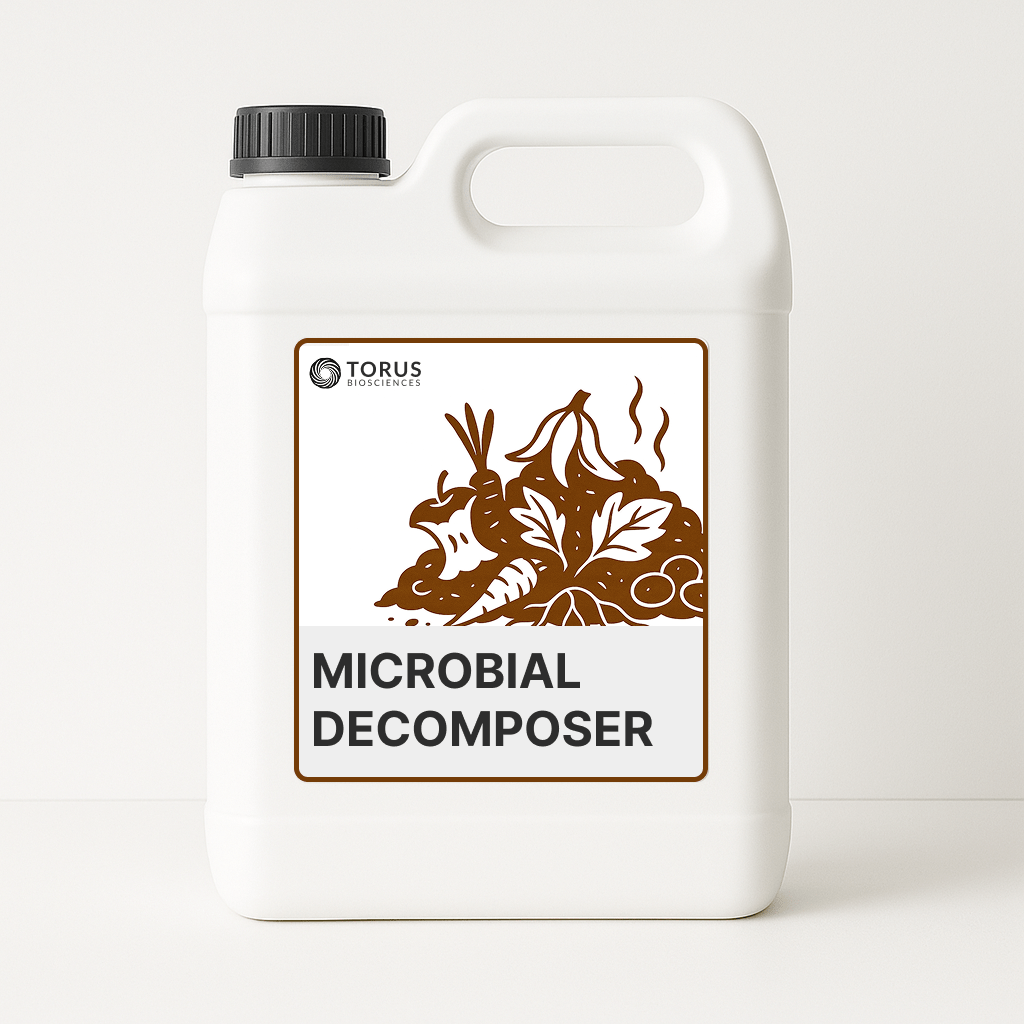
Jeevodharini Mushroom Waste Decomposer (MC 113) is a targeted microbial consortium developed for the composting of spent mushroom substrate (SMS) and other mushroom cultivation residues. After a mushroom crop is harvested, the leftover substrate (typically a mix of straw, sawdust, spent compost, and residual mycelium) is bulky, fibre-rich, and slow to break down on its own. This consortium accelerates its conversion into a stable, humus-rich compost while suppressing the residual fungal contaminants that commonly persist in spent beds.
The formulation pairs cellulolytic and lignolytic microbes that dismantle the tough lignocellulosic residues with strains that competitively exclude spoilage and contaminant organisms, yielding a uniform, nutrient-rich end product in a fraction of the usual time.
Benefits
-
Accelerated Substrate Breakdown: Reduces the decomposition time of spent mushroom substrate by 45-60% compared to unmanaged stockpiling, allowing mushroom farms to turn over waste beds quickly and reclaim valuable growing space.
-
Efficient Lignin and Cellulose Degradation: Specialized lignolytic and cellulolytic strains target the fibrous straw, sawdust, and residual mycelium that make spent substrate slow to compost, converting recalcitrant material into stable organic matter.
-
Enhanced Nutrient Profile: Nutrient-mobilizing microbes raise the NPK value of the finished compost by 25-35%, transforming a waste stream into a balanced soil amendment.
-
Contaminant Suppression: The consortium competitively excludes and suppresses residual fungal contaminants such as Trichoderma green mould and other weed moulds commonly found in spent beds, producing a hygienically safe end product.
-
Odor and Fly Control: Predominantly aerobic decomposition minimizes foul-smelling compounds and reduces the fly and pest pressure often associated with piles of decaying substrate.
-
Circular Waste Management: Converts a disposal liability into a revenue-generating, nutrient-rich compost, closing the loop for mushroom cultivation operations.
Suitable Waste Types
Jeevodharini Mushroom Waste Decomposer is optimized for mushroom cultivation residues, including:
- Spent Mushroom Substrate (SMS): The leftover compost and casing material after button, oyster, milky, or paddy-straw mushroom harvests.
- Spent Straw and Sawdust Blocks: Used oyster and shiitake substrate blocks composed of straw, sawdust, and supplements.
- Casing Soil and Trimmings: Residual casing layers and stalk/trimming waste from the packing shed.
- Mixed Farm Waste: SMS blended with other agricultural residues, manures, or green waste for co-composting.
Application
Apply directly to spent mushroom substrate at a rate of 1 litre per tonne of waste. Mix thoroughly with the material, maintain moisture at 40-60% (damp but not waterlogged), and turn the pile periodically to ensure uniform aeration and decomposition. For heavily contaminated beds, sanitize as per standard practice before inoculation for best results.
Product Specifications
- Product Code: MC 113
- Type: Consortia
- Dosage: 1 litre/tonne
- Storage: Ambient (~25℃)
- Shelf Life: 1 Year
Storage and Usage Instructions
For detailed storage and handling information, please refer to the storage guidelines in our Application Guides.
Available Variants

Boost productivity with our sustainable biological solutions.
Trusted by agricultural and waste management professionals for superior results.
Request pricing & availability We're engineering microbes for a sustainable future.
Based in Bangalore.


© 2026 Torus Biosciences. All rights reserved.